The Black Licorice Test
What speaking at the American Black Film Festival reminded me about getting funded, getting seen, and betting on yourself first

Before I tell you what I said on that stage, I want to tell you what I almost didn’t say.
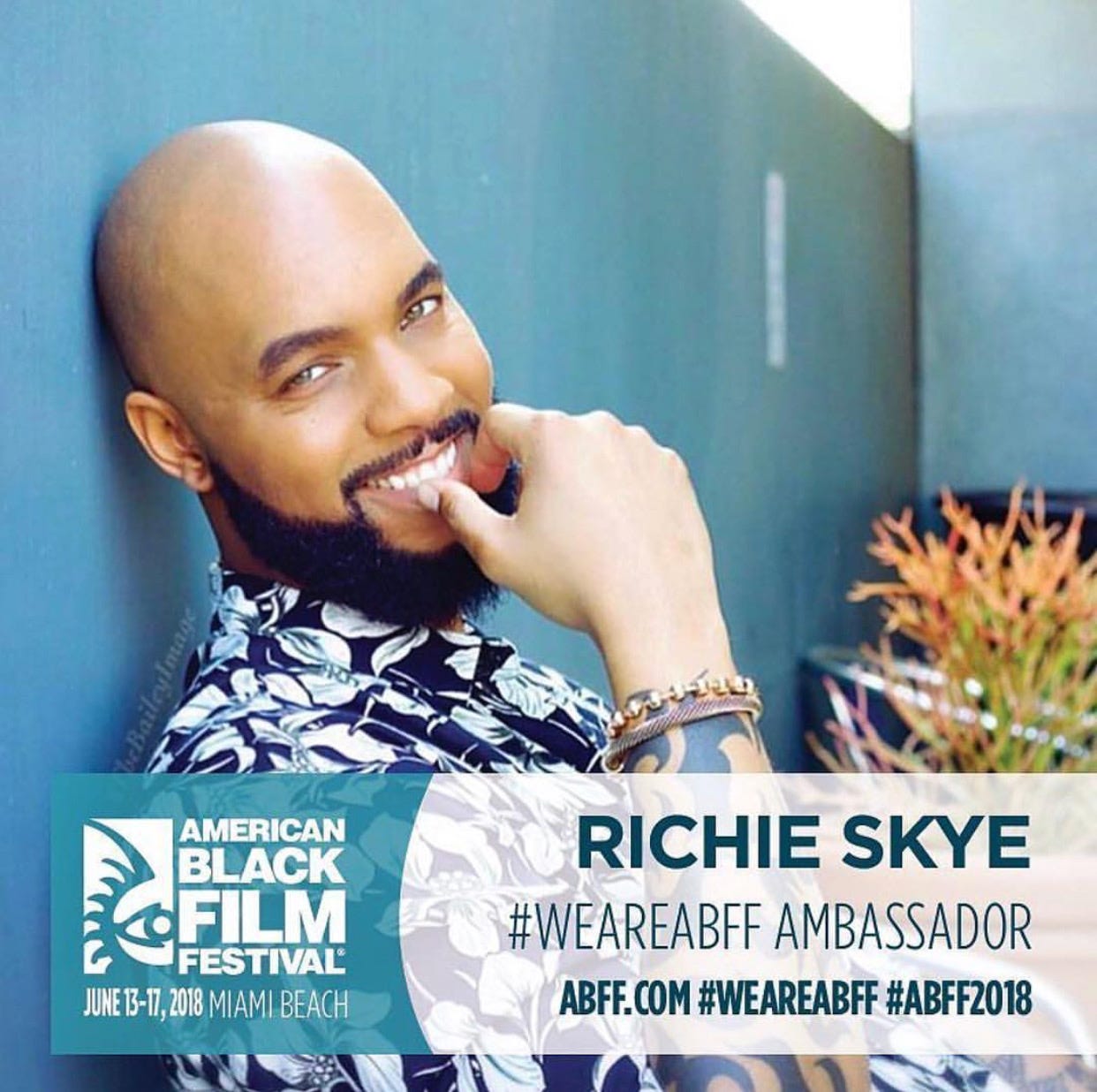
I came to the American Black Film Festival back in 2018 as an ambassador. I left that year with a gig, a seat on a daily talk show called Daily Flash. Then the network moved from Miami to Orlando, and my role moved right out from under me. That is the part of the story people skip when they tell you how careers get built. There is always a season where the thing you were counting on relocates, folds, or quietly stops returning your calls.
So I built my own. I started a podcast. And the work I did on that show, day after day, is the reason news organizations call me now instead of the other way around.
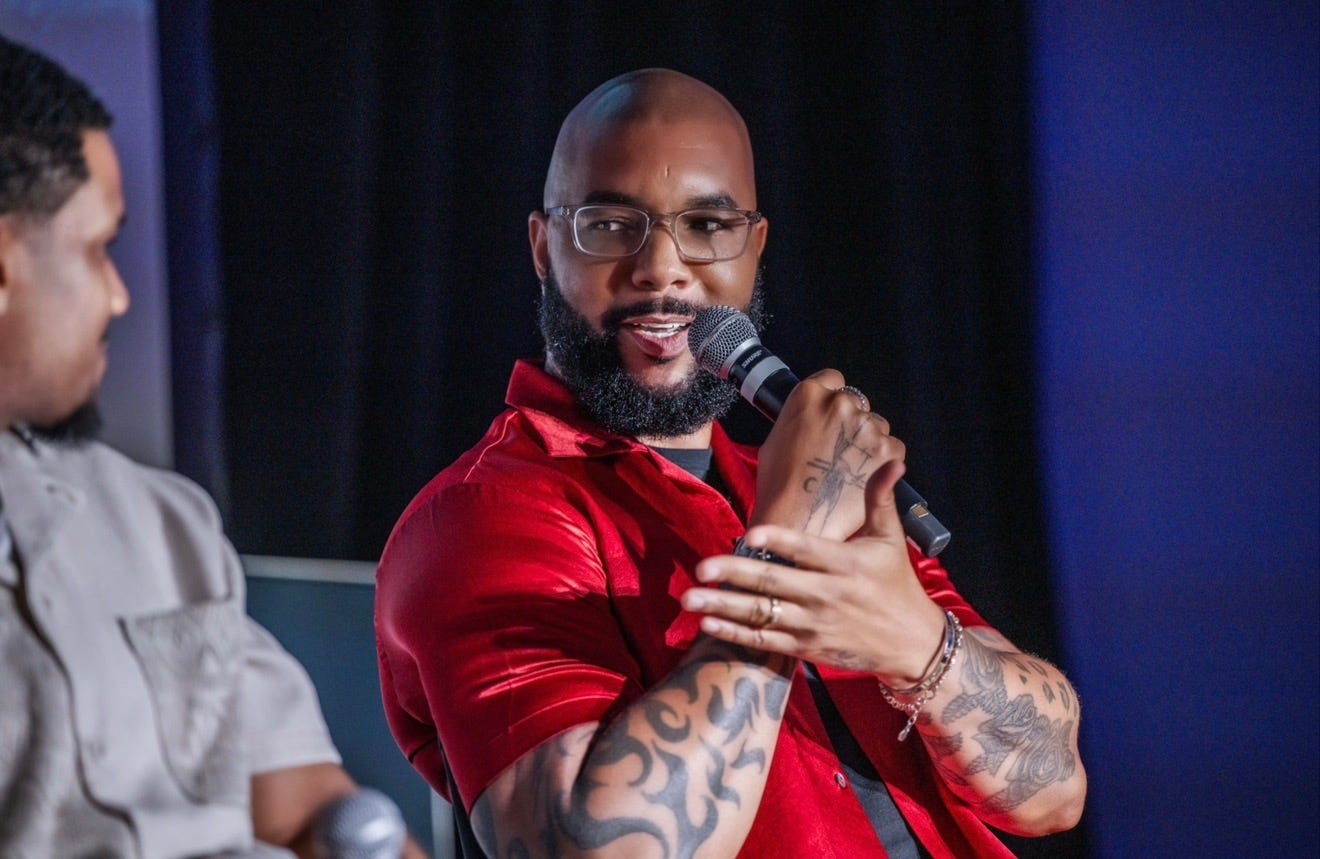
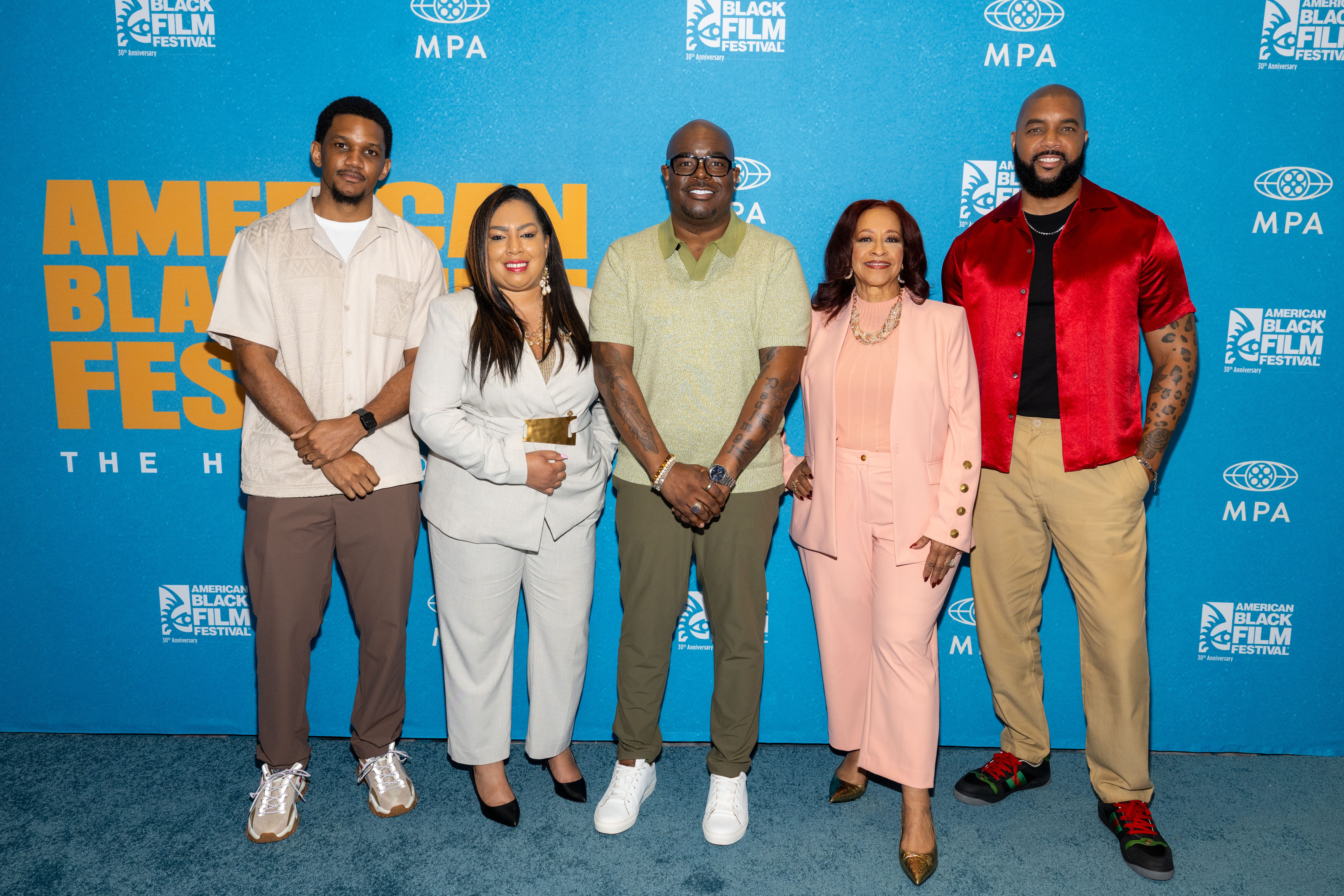
This year I came back to ABFF in Miami for a different reason. I was asked to speak on a panel sponsored by the Motion Picture Association, moderated by John Gibson, the MPA’s Vice President of Public Affairs and Industry Relations. The panel was called “DC as a Creative Capital: Pathways to Production and Power.” On stage with me were Priscilla Clark of Clark PR, who lives in the entertainment publicity world; Latoya Foster, DC’s Film Commissioner and Director of the DC Office of Film, Media and Entertainment, who also serves as Communications Director for the Mayor; and Cam Lawson, creator and host of The Opening Scene, the DMV podcast built around community, conversation, collaboration, and creation.
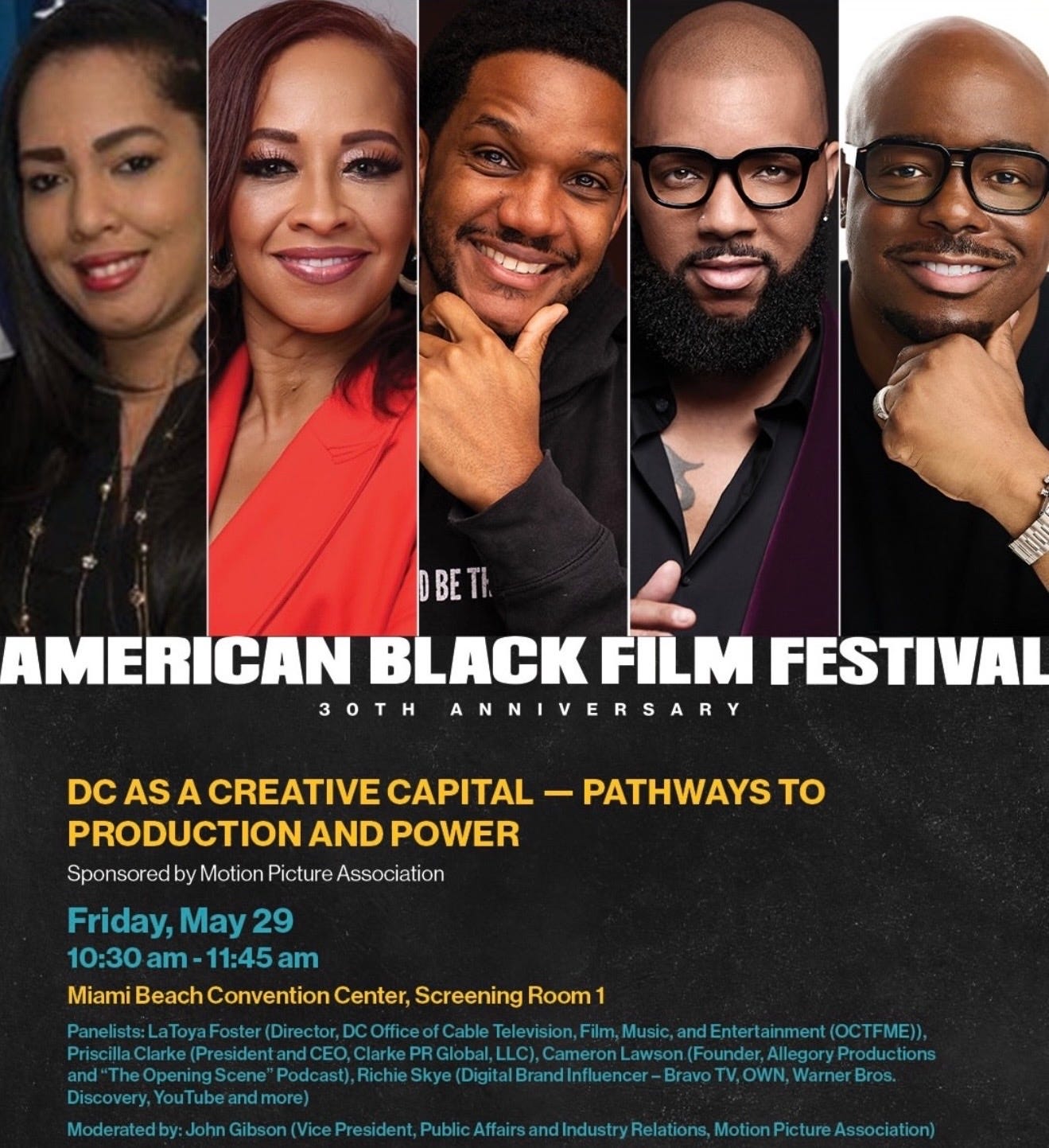
The session was about how Washington and the broader DMV are becoming a real home for creative industries. How policy, workforce development, and collaboration build sustainable creative economies. How production pipelines and investment open up for Black storytellers in markets that have been overlooked for a long time. Everyone on that panel brought something true. Latoya brought the institutional view, the funds, and the infrastructure the District is actually putting in place. Priscilla brought the relationships. Cam brought the community.
I brought a slightly different message, and I knew it was different while I was saying it.
What DC actually teaches you
Here is the thing I have come to believe about this region. In a lot of cities, the door opens based on who you know. In DC, the door opens based on the work you’ve done. The work shows up before you do. It speaks in the room before you’ve finished introducing yourself. That is not a small distinction. It changes what you spend your energy on.
A client and now business partner Tia Santiago said something to me right before I walked out on that stage. She told me to remember that I was the prize. Not the person asking for a seat at the table, but the prize at the table. I have value, and my value lives in the work I’ve already done.
That reframe is everything. When you walk into a funding conversation as the petitioner, you are asking someone to believe in a maybe. When you walk in as the prize, you are showing them a thing that already works. By the time you ask anyone for money, they can see four things at once: that you are serious, that you have done the work, that you can gather an audience, and that you can already generate revenue. That last one quietly makes your name marketable, because a name that already moves money is a name worth investing in.
I will be honest about my own receipts, because they are part of why I can say this with a straight face. When I moved my podcast onto YouTube, I doubled my revenue in the first month. The next month, I doubled it again. My highest month brought in sixty-seven thousand dollars from ad revenue alone. I do not say that to impress you. I say it because every dollar of it came from work I owned, on a platform I controlled, for an audience I built myself. None of it required permission.
The point where I diverged from the room
When it was my turn, I said the thing out loud: build your own.
While you are waiting on a network, a sponsor, an investor, or a grant, build the thing yourself. Build it so well that the people with the budgets start coming to you. And here is the practical reason, the one nobody likes to say on a conference stage: you have to eat in the meantime. You have to monetize yourself in the interim, while the institutional money makes up its mind. The good news is that you can, and you do not have to wait for anyone to hand you a check before you start earning.
That was a small act of defiance, sitting next to the MPA and a sitting film commissioner and saying the quiet part. The institutional path is real, and it matters. It also runs on someone else’s timeline, but the thing you build runs on yours.
The black licorice test

I asked the room a question. In a space at about ninety-eight percent capacity, packed, I asked who in the audience loves black licorice. Black licorice is an acquired taste, so only a few hands went up.
Good, I said. Now I am only talking to you.
That is the whole lesson. Your work has to speak to one specific person before it can speak to everyone. For me, that person was the reality TV lover. Once I knew exactly who I was building for, I could double down and become their go-to source for the one thing they cared about, and then build everything else out from there. The people who try to talk to the entire room end up reaching no one. The people who find their few raised hands build something real.
If you take one thing from this essay, let it be that. Find your black licorice people. Serve them better than anyone else will. The audience is the asset. The audience is what turns you into the prize.
What’s actually available to you in the DMV
I promised the room something specific, so let me give you the same thing here. The region has real money and real on-ramps. Some of it rewards scale you have to build toward. Some of it is accessible right now. Figures shift year to year, so confirm the current numbers with each office before you build a budget around them, but as of this writing, here is the map.
If you are producing at scale, the tax incentives are serious.
DC offers a rebate through the Office of Cable Television, Film, Music, and Entertainment of up to 35 percent of qualified production spending that is taxable in the District, with additional rebates for in-District vendors and for hiring resident cast and crew. It carries a minimum spend of $250,000.
Maryland offers a refundable film production tax credit of 28 percent for most projects and 30 percent for series, with a $250,000 minimum. The number that matters most for independent creators is the Maryland Small Films track: a $25,000 minimum in-state spend, a credit up to a $125,000 cap, and open to entities that have been organized in Maryland for at least three months and have fewer than 25 full-time employees. That is a door an independent producer can actually walk through.
Virginia runs two programs through the Virginia Film Office. The refundable tax credit starts at 15 percent of qualifying spend and climbs to 20 percent in an economically distressed area, with bonuses for hiring Virginia residents. Alongside it sits the Governor’s Motion Picture Opportunity Fund, a discretionary grant with no minimum spend, which makes it worth a conversation even for smaller projects.
If you are building before you are producing at scale, these are the on-ramps.
The DC Commission on the Arts and Humanities funds individual artists directly through its Arts and Humanities Fellowship Program, and past grantees have included filmmakers, producers, and podcasters. If you live and work in the District, this is a fellowship that exists for exactly who you are.
Fiscal sponsorship, through an organization like Fractured Atlas, lets an individual creator or a small LLC receive tax-deductible donations, apply for grants you could not otherwise touch as an individual, and run a crowdfunding campaign with nonprofit backing. It is one of the most overlooked tools for a creator who has the work but not yet the institution behind it.
Again, also do your due diligence as you’re researching these opportunities to ensure the figures remain the same - or at least be aware of additional requirements.
However, the pattern in all of it is the same. The institutional money rewards proof. The proof is the audience and the body of work you build on your own first, which brings us back to where we started.
Walk in as the prize
The festival reminded me of something I needed to hear in 2018 and would have paid for then. You are the prize, and your work is the evidence. Build it for your specific people, monetize it while the bigger money decides, and let the thing you made do the talking when you finally walk into that room.
I learned this the slow way so you don’t have to.
If you want to map out exactly what your own content revenue model looks like, the audience you should be serving, the offer that turns attention into income, and the path from where you are now to funded, I do that work one-on-one. You can book a 1:1 breakthrough strategy call with me here: Book Now
Come to the table with your work in hand. That has always been the move. Boom.
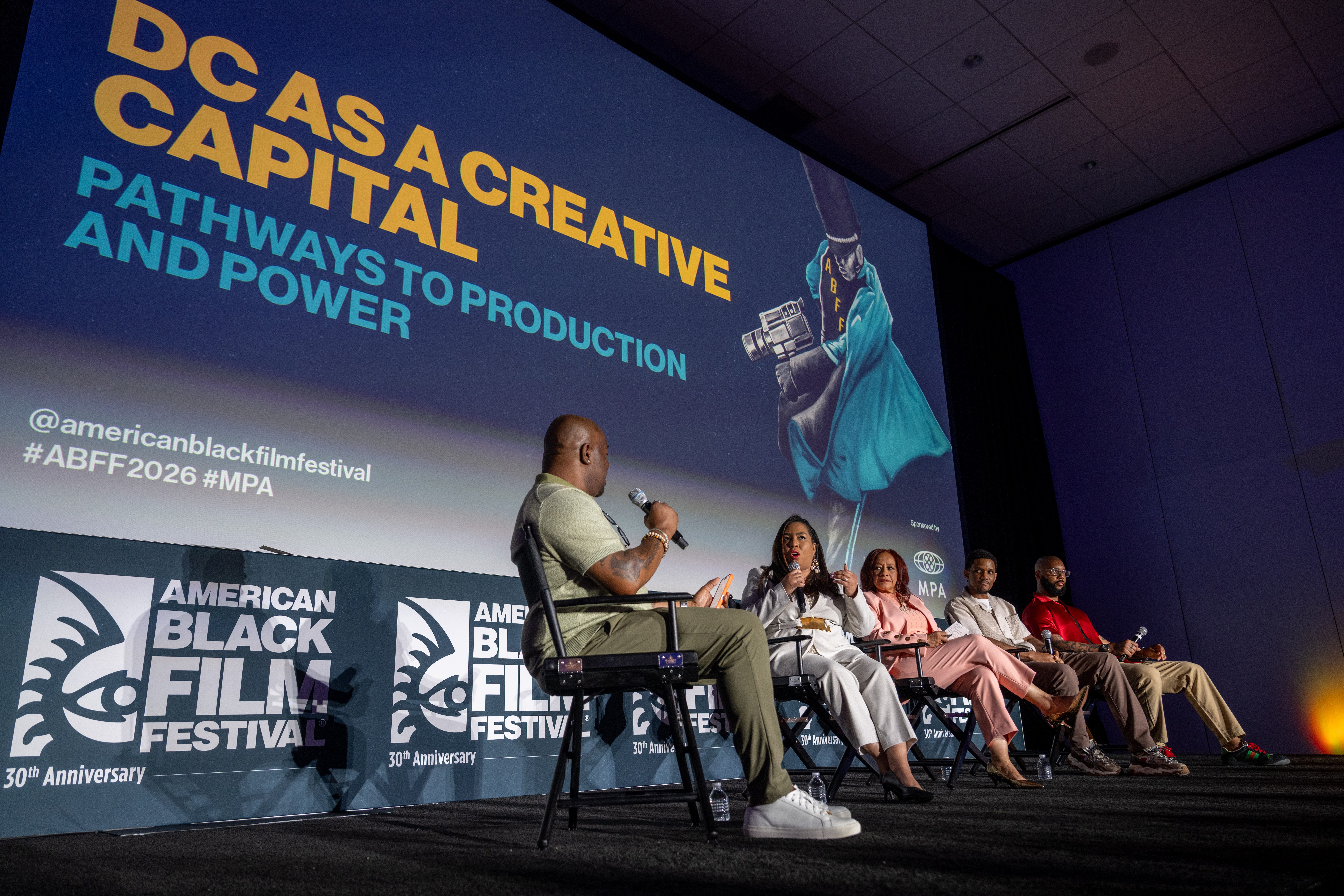
As always, I’m forever grateful to the John Gibson and the Motion Picture Association for the many opportunities to collaborate and continue to “do the work.”
Follow along: @djrichieskye